10 hr
Cape Point & Boulders Beach Full-Day Tour
Journey to Africa's southwestern edge, meet endangered penguins, and climb to a historic lighthouse.
Reserve
Hand-picked by our editors — only the best 5 experiences from 47 reviewed.
Verified partners for every tour, free cancellation where available, and instant confirmation on every booking.
10 hr
Journey to Africa's southwestern edge, meet endangered penguins, and climb to a historic lighthouse.
Reserve
10 hr
Journey to dramatic Cape Point, meet adorable penguins, and cruise Chapman's Peak in luxury comfort
Reserve
5 hr
Half-day journey to Africa's southwestern edge, Chapman's Peak, and the famous penguin beach
ReservePrices from verified partners. Availability updates in real time at checkout. Free cancellation policies apply where shown.
The landmarks, rooms, and views travelers on this tour remember — all visible on a single visit.
Located at the tip of the peninsula, this lighthouse sits 87 meters above sea level and offers expansive ocean views. It was built in 1860 and remains an iconic maritime landmark.
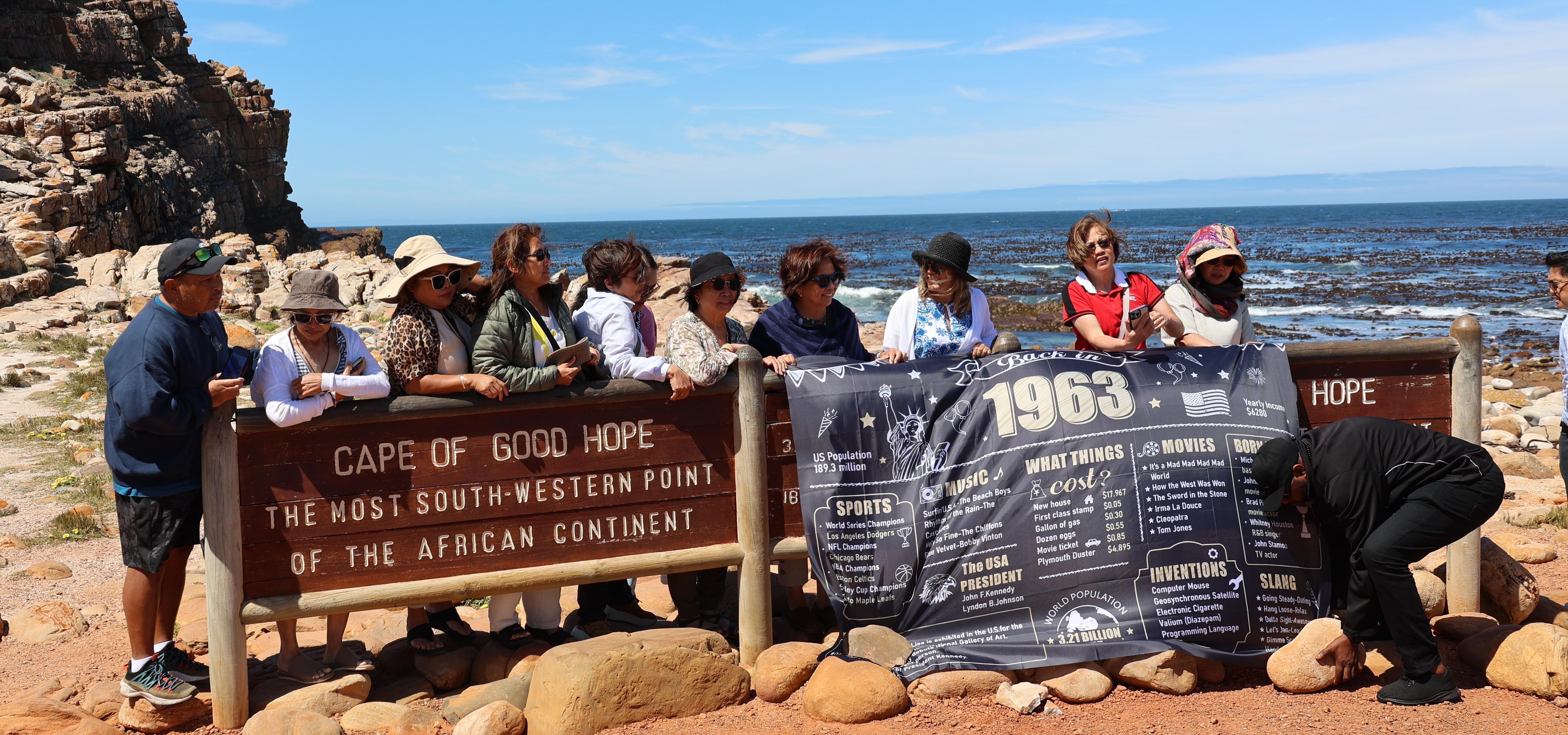
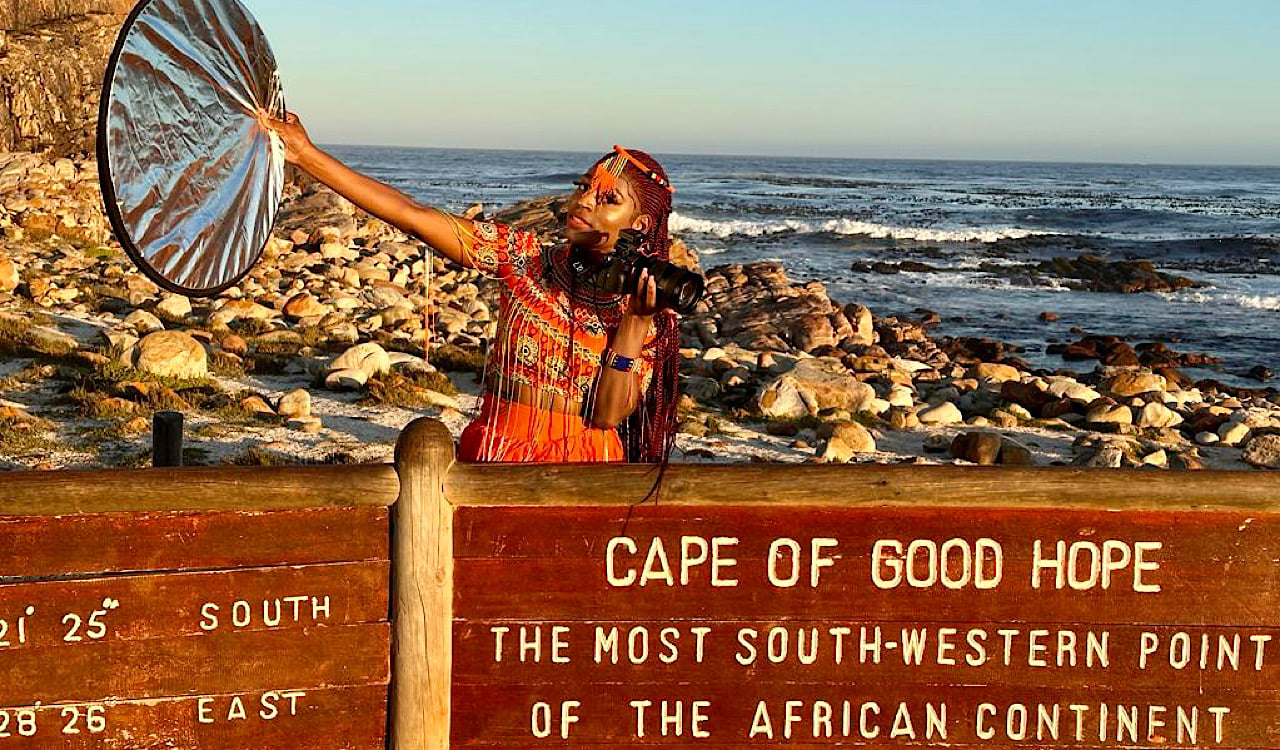
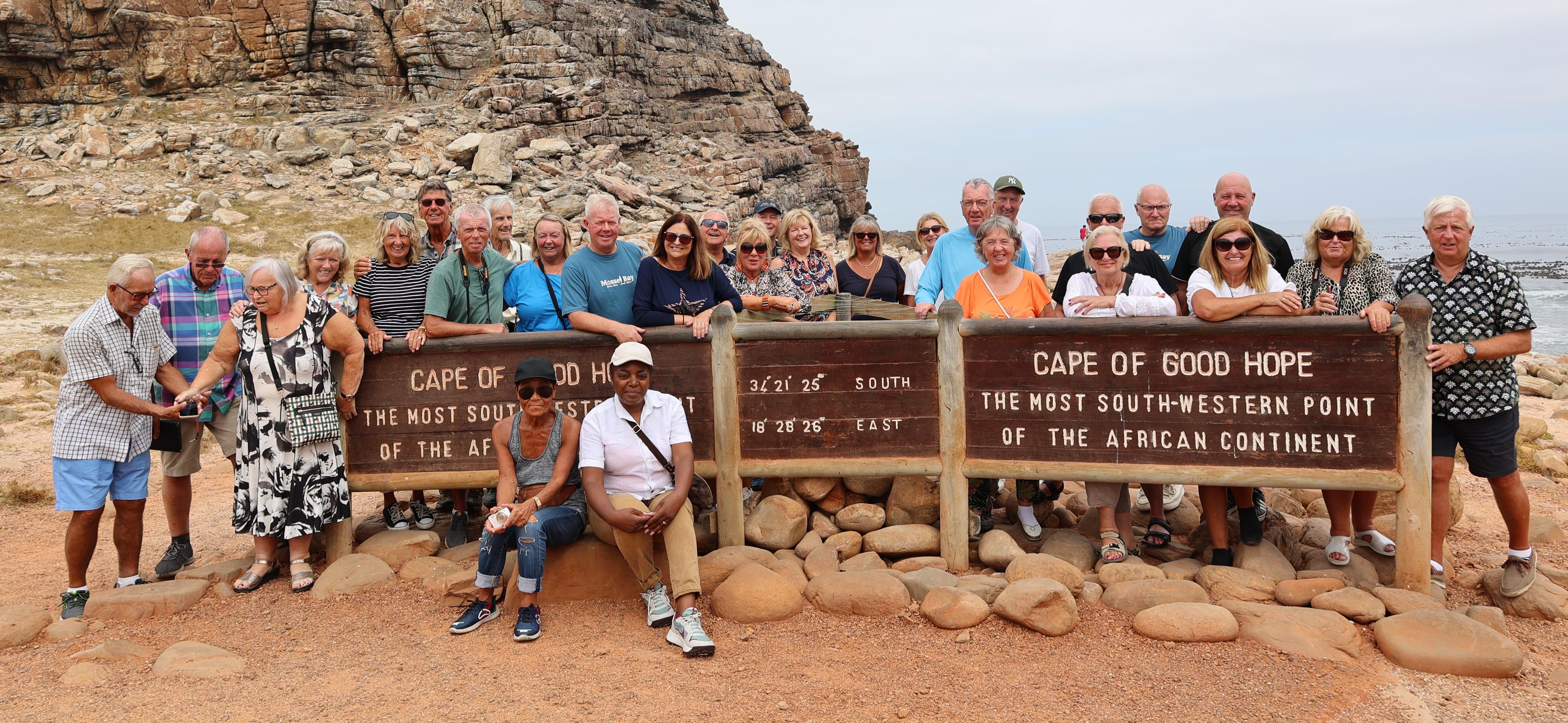
This is the southwesternmost point of the African continent. It is known for its rugged cliffs and the historic sign marking the geographic location.
This protected area is home to a colony of over 2,000 African penguins. The beach features ancient granite boulders that provide shelter for the birds.
A calm tidal pool and beach area located within the reserve. It is one of the few spots where swimming is safe due to the sheltered rock formations.
The original 1860 structure is no longer used for navigation but serves as a historical viewing point. It is reached via a steep path from the lower parking area.
Professional guided tours provide seamless logistics for those preferring a passive experience, while self-drive trips offer complete autonomy for independent travelers.
| Feature | Top pick Guided Half-Day Tour | Self-Drive Excursion |
|---|---|---|
Logistics |
Managed transport provided | Requires vehicle rental and fuel |
Navigation |
Driver handles all routing | Independent GPS required |
Cost Structure |
Inclusive of transport and entry | 515 ZAR entry plus vehicle costs |
Flexibility |
Fixed schedule and stops | Unrestricted time at each location |
Stress Factor |
Low as transit is managed | Higher due to route planning |
Local Insight |
Guided commentary provided | Self-guided discovery only |
| See tickets → |
Verdict: If you want a stress-free experience, a from cape town cape point and boulders beach half day tour ticket is ideal, whereas a self-drive excursion provides the freedom to explore the Cape Peninsula at your own pace.
Choose your ticket, select your date, and reserve in under two minutes. Secure checkout handled by our verified partner.
Instant confirmation by email, with a mobile voucher you can save offline. No printing, no queuing at a collection desk.
Arrive at the entrance, show your voucher on your phone, and walk in. Most tickets include priority or skip-the-line access.
Practical details for your visit straight from our verified partners — hours, access, rules, and how to get there.
Cape Town CBD
Standard pickup location for most operators.
Follow the M4 south from Cape Town to reach the entrance.
Ride-hailing services operate routes to the main reserve gate.
Wear comfortable walking shoes with good grip for the rocky paths found on a from cape town cape point and boulders beach half day tour. Bring layers as coastal winds can decrease temperatures rapidly.
Keep all personal belongings secure and within sight at all times while exploring during your from cape town cape point and boulders beach half day tour. Large hiking backpacks are permitted but must not obstruct paths.
Photography is permitted throughout the reserve, though drone usage requires specific permits from SANParks. Capture the coastal scenery during your from cape town cape point and boulders beach half day tour safely.
While the lower sections near the parking lot are accessible, many trails leading to viewpoints involve uneven terrain. Guests with limited mobility should verify options for funicular access when booking their from cape town cape point and boulders beach half day tour.
Mobile signal can be intermittent in the more remote parts of the reserve. Download necessary maps before starting your from cape town cape point and boulders beach half day tour.
The from cape town cape point and boulders beach half day tour is suitable for families, especially the visit to see the penguins. Ensure children stay on designated boardwalks to protect local flora.
There is a restaurant and a take-away shop located near the lighthouse parking area. Guests on a from cape town cape point and boulders beach half day tour may also bring their own snacks.
No pets are allowed inside the Cape Point Nature Reserve at any time. This regulation helps protect the native wildlife and baboon troops from potential disturbance.
The 515 ZAR conservation fee is a standard requirement for international adult visitors. Always confirm if your from cape town cape point and boulders beach half day tour includes this entrance fee in the final price.
Best time to go, insider tips, nearby landmarks, and the cancellation fine print — flip through to skim what matters to you.
How crowds, weather, and events shift across the year.
September to November offer mild temperatures and blooming wildflowers throughout the reserve.
December to February provides clear skies, though this is the busiest time for visitor traffic.
March to May features calm winds, making it an excellent time for coastal photography tours.
June to August is cooler and wetter, offering a quieter experience away from the crowds.
Small details that turn a good visit into a great one.
Aim for an arrival between 06:00–09:00 to experience the reserve before the bus groups arrive.
Visit Boulders Beach early in the day to see penguins when they are most active near the water.
Keep vehicle windows closed at all times to prevent local baboons from entering the car.
Wear sturdy walking shoes to navigate the trail leading up to the Old Lighthouse.
Apply sunscreen before starting your tour as there is minimal shade on the exposed cliff paths.
Keep a digital copy of your payment confirmation to streamline entry if the 515 ZAR fee is included.
Non-bookable sights within a short walk — free to visit, easy to pair.
The famous rocky headland marking the southwestern tip of Africa.
A scenic tidal pool area perfect for a quick break.
A historic lighthouse situated on the cliffs above the ocean.
Flexible, no hidden fees.
Full refunds are typically provided for cancellations made at least 24 hours in advance of the scheduled departure. The conservation fee of 515 ZAR is generally included in tour packages but is subject to operator-specific refund terms.
Hand-picked options within walking distance — pick a district for vibe, or a specific hotel for convenience.
Charming accommodations located close to the penguin colony.
High-end stays centrally located for tour departures.
Cape Point's lighthouse stands 238 metres above sea level at the southwestern tip of Africa, marking not the continent's southernmost point—that distinction belongs to Cape Agulhas, 150 kilometres east—but rather the dramatic headland where the cold Benguela Current of the Atlantic meets the warmer Agulhas Current of the Indian Ocean. This hydrographic collision creates nutrient-rich upwellings that have sustained maritime traffic, shipwrecks, and seabird colonies for centuries. The original lighthouse, completed in 1859, was decommissioned in 1919 after the Portuguese vessel Lusitania wrecked in fog; its beam sat too high to penetrate low cloud. A replacement structure now operates 87 metres lower on Dias Point, named for Bartolomeu Dias, who rounded the Cape in 1488 during the first European voyage to chart this coastline. The Cape Point Nature Reserve encompasses 7,750 hectares within Table Mountain National Park, a UNESCO World Heritage Site since 2004. Its fynbos vegetation—dominated by proteas, ericas, and restios—represents one of six floral kingdoms on Earth, compressed into an area smaller than metropolitan Cape Town. More than 1,100 indigenous plant species thrive here, along with resident baboon troops, Cape mountain zebra, bontebok, and eland. The terrain rises abruptly from sea level to 400-metre cliffs sculpted by sixty million years of erosion, their sedimentary strata recording ancient marine deposits now tilted skyward by tectonic pressure. Boulders Beach, eighteen kilometres north in Simon's Town, shelters a breeding colony of African penguins—formerly known as jackass penguins for their donkey-like braying call. The colony established itself in 1982 when two breeding pairs nested among the granite boulders; today approximately 3,000 birds occupy the protected shoreline. African penguin populations have declined ninety percent since 1900 due to guano harvesting, overfishing of sardine and anchovy stocks, oil spills, and coastal development. The species was reclassified as endangered in 2010. Boardwalks installed in 1985 allow close observation while restricting human disturbance to nesting zones; the beach itself permits supervised swimming within designated sections, separated from penguin habitat by rope barriers and signage. The coastal drive linking these sites follows Chapman's Peak, a nine-kilometre toll route carved into the Constantia mountain face 600 metres above Hout Bay. Blasted through Chapman's Peak quartzite between 1915 and 1922, the road required 521,000 cubic metres of rock removal and remains vulnerable to rock falls; anchored nets now stabilize the cliff face. From cape town cape point and boulders beach half day tour itineraries traverse this route both directions, descending through Noordhoek and Kommetjie before entering the reserve from the southern approach. The round trip covers roughly 140 kilometres, balancing drive time against extended stops at the lighthouse funicular, penguin viewing platforms, and cape of good hope signpost where visitors photograph the weathered marker erected in 1919.

"Cape Point's lighthouse marks not the continent's southernmost tip, but the dramatic collision of two ocean currents that have shaped centuries of maritime history."
A step-by-step walkthrough of the visit — what you'll see, how long each stage takes, and the details that matter.
You depart Cape Town along the Atlantic Seaboard, Chapman's Peak unfolding as a succession of 114 curves pinned to vertical cliff faces. The road drops into Noordhoek's sixteen-kilometre beach sweep before narrowing through Scarborough and into the reserve's entrance gate, where your conservation fee—515 ZAR for international visitors—grants access to the entire Table Mountain National Park marine protected area. The approach to Cape Point climbs through coastal fynbos; baboons often patrol the carpark perimeter, indifferent to vehicles. You board the Flying Dutchman funicular or take the footpath—a twenty-minute ascent on stone steps—to the old lighthouse platform. Wind accelerates through the gap between Dias Point and the main headland; below, waves fracture against submerged reefs where the Portuguese freighter Thomas T. Tucker grounded in 1942, her rusted boiler still visible at low tide. The two-ocean confluence is invisible to the eye but tangible in the water temperature drop you'll feel later at Boulders Beach. From the cape of good hope signpost—a weathered wooden marker commemorating Dias and Vasco da Gama—you backtrack north to Simon's Town. Boulders Beach boardwalk deposits you above a sheltered cove where African penguins nest in scrub thickets and forage in tidal shallows. The birds' slate-gray backs and tuxedo markings blur against granite; their braying echoes carry across the inlet. You descend wooden stairs to a sandy platform ten metres from the colony's northern edge, close enough to observe preening, nest defense, and the unsteady waddle of molting juveniles returning from the surf.
The reserve is open daily from 06:00–18:00. This schedule applies to all visitors entering the park.
Most operators include the 515 ZAR conservation fee for international adults in their tour packages, but you should confirm this during booking.
To avoid heavy tour bus crowds and mid-day heat at the popular lighthouse trail, arrive between 06:00–09:00. This early start also allows for better wildlife viewing conditions.
Yes, these tours are family-friendly and suitable for all ages. Children will enjoy seeing the penguins at Boulders Beach.
Yes, you can take photos, but you must remain on the designated boardwalks. Please do not approach or feed the penguins during your visit.
Yes, you can secure your from cape town cape point and boulders beach half day tour tickets through various online travel platforms.
Most tours operate in light rain, but operators may reschedule in extreme conditions for safety. Check with your specific tour provider for their policy.
Yes, there is a restaurant near the lighthouse area. It is a convenient place to grab a meal during your from cape town cape point and boulders beach half day tour.
While you can use your phone, service is unreliable in the reserve. It is best to have an offline map ready before you leave Cape Town.
A from cape town cape point and boulders beach half day tour usually spans several hours, allowing enough time to see both main landmarks effectively.